Contact Information
Location
Aver Logistics Ltd
Chenies Manor House
Chenies
Buckinghamshire
WD3 6EP

As global supply chains continue to rebalance, rail freight from China to the UK has become a serious transport option rather than a niche solution. For shippers caught between long ocean transit times and high air freight costs, rail offers a middle ground on speed, cost, and reliability.
This article explains how China–UK rail freight works, when it makes sense, and what shippers should realistically expect.
Rail freight between China and the UK forms part of the broader China–Europe rail network, often referred to as the China–Europe Railway Express. Containers move by block train across Central Asia and Eastern Europe before entering Western Europe and continuing to the UK via the Channel Tunnel.
Common origins include inland Chinese hubs such as Xi’an, Chengdu, Zhengzhou, and Yiwu. Final UK destinations typically include London, Birmingham, and Manchester rail-linked logistics hubs.
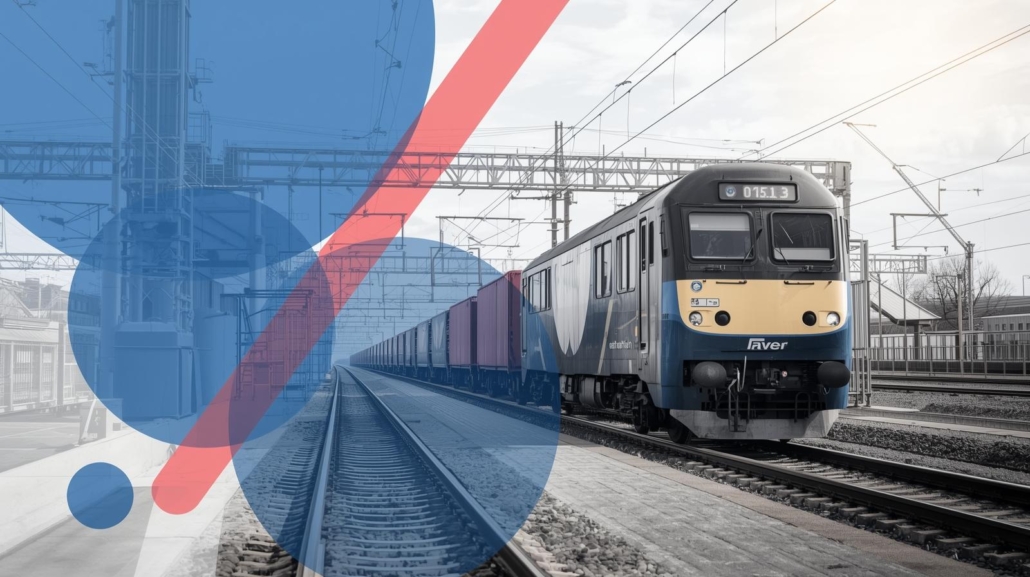
One of the main reasons shippers search for rail freight from China to the UK is transit time.
Typical benchmarks are:
Rail freight: 18 to 25 days terminal to terminal
Ocean freight: 35 to 50 days depending on port congestion
Air freight: 3 to 7 days door to door
Rail is not a replacement for air when inventory is critical. It is best viewed as a way to reduce ocean lead times without absorbing air freight pricing.
Rail freight pricing usually lands between ocean and air.
More expensive than FCL ocean freight
Significantly cheaper than air freight
More stable than spot air rates during peak seasons
For medium-value cargo, seasonal retail goods, automotive parts, and industrial components, rail often delivers the best cost-to-speed ratio.
Rail reliability has improved, but it is not risk-free. Border crossings, gauge changes, and geopolitical developments can affect schedules.
Key considerations include:
Multiple border handovers across Central Asia and Europe
Customs clearance at origin and destination
Capacity tightening during peak periods such as Q4 and Chinese New Year
Shippers using rail should plan earlier than they would for ocean and avoid treating it as a last-minute fallback for air.
Rail freight from China to the UK is particularly effective for:
Consumer goods and retail stock
Automotive and engineering parts
Electronics and accessories
Industrial equipment and components
Hazardous cargo and temperature-controlled shipments may be possible but require route-specific validation and carrier approval.
Rail freight is not a universal solution. It works best when:
Ocean transit times are too slow
Air freight is commercially unjustifiable
Forecasting allows for structured planning
Cost, speed, and emissions all matter
For many importers, rail is now a permanent part of the modal mix rather than a temporary workaround.
Rail freight has matured into a credible, repeatable transport option. It rewards early planning, realistic expectations, and careful route selection.
Used correctly, it can shorten lead times, control costs, and add resilience to UK-bound supply chains without relying solely on air or ocean.
 Scroll to top